AI-Assisted Systematic Literature Reviews: A Practical Exploration with Python
Systematic Literature Reviews (SLRs) are widely used to provide rigorous evidence synthesis in academic research. By systematically identifying, screening, evaluating, and synthesizing prior studies, SLRs provide a rigorous foundation for theoretical development and empirical inquiry.
However, conducting an SLR is notoriously time-consuming, cognitively demanding, and methodologically complex.
Recent advances in Artificial Intelligence (AI), particularly in machine learning and natural language processing (NLP), are reshaping how researchers approach knowledge synthesis.
The Challenge of Traditional SLRs
A conventional SLR typically involves:
- Defining research questions
- Designing search strategies
- Screening titles and abstracts
- Conducting full-text eligibility assessment
- Extracting structured data
- Performing quality appraisal
- Synthesizing findings
When datasets involve hundreds or thousands of publications, manual screening can become a major bottleneck.
AI has the potential to significantly reduce review time while supporting methodological rigor — provided it is implemented responsibly.
How AI Transforms the SLR Workflow
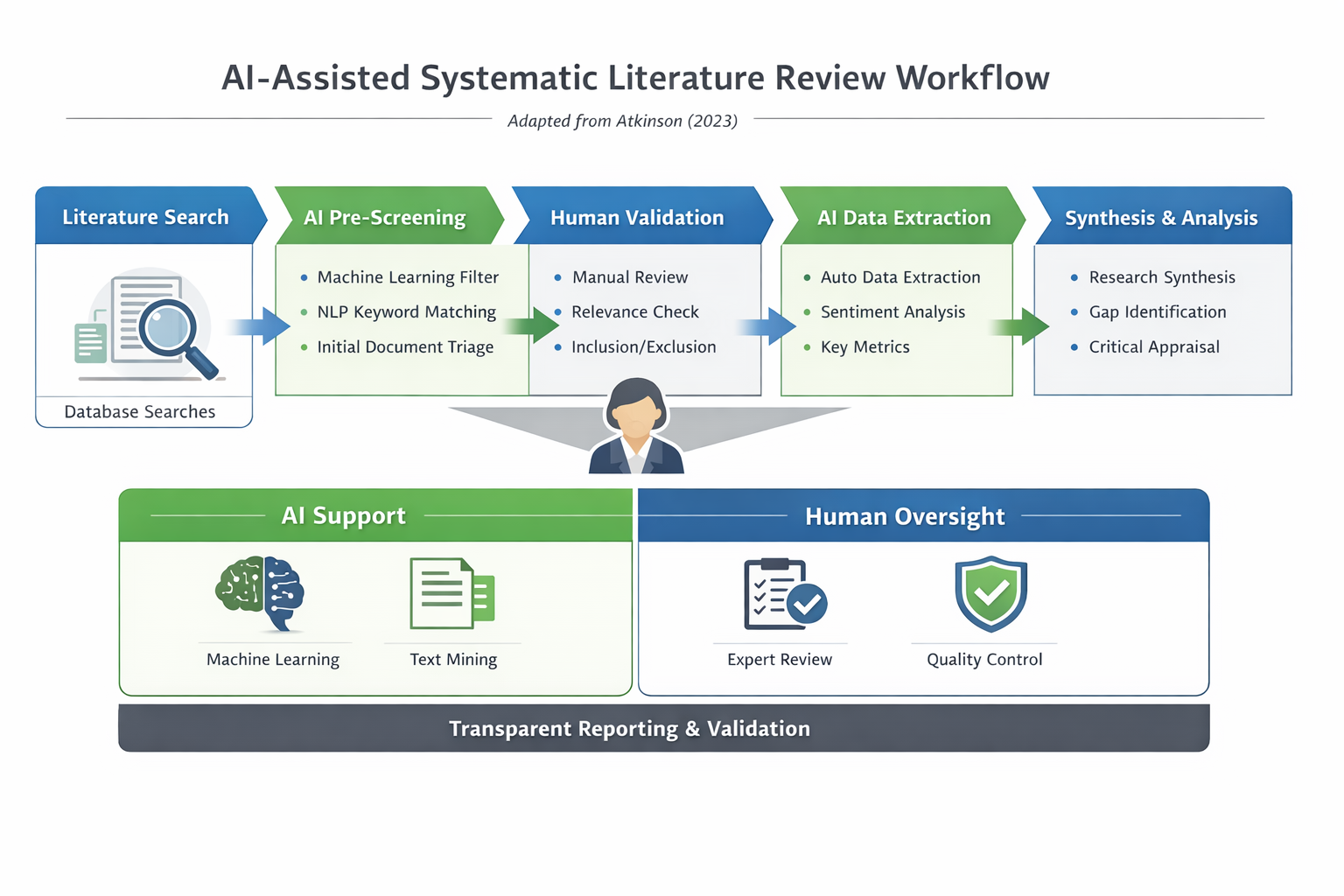
Figure 1. AI-Assisted Systematic Literature Review Framework.
AI does not replace researchers. Instead, it augments specific stages of the review process.
1️⃣ Automated Screening
Supervised machine learning and NLP models can classify abstracts according to predefined inclusion and exclusion criteria. Such approaches can reduce the manual burden of screening large numbers of records while supporting consistent application of screening criteria.
2️⃣ Structured Data Extraction
Text-mining pipelines can assist in extracting:
- Research objectives
- Methodological approaches
- Sample characteristics
- Key findings
This can improve coding consistency and reduce researcher fatigue during large-scale reviews.
3️⃣ Semantic Synthesis and Gap Detection
Large Language Models (LLMs) can support:
- Thematic clustering
- Trend detection
- Cross-study comparison
- Research gap identification
Such capabilities can accelerate the transition from data collection to analytical insight.
Human-in-the-Loop: Preserving Rigor
Despite these advantages, AI-assisted SLRs require a human-in-the-loop approach.
Algorithmic bias, hallucinated outputs, and limited model transparency remain important methodological concerns. Therefore, AI should function as a decision-support tool rather than an autonomous reviewer.
Maintaining transparency, validation checkpoints, and reproducibility protocols helps preserve academic rigor.
Practical Implementation with Python
Demonstration: Automated Screening in Practice
The dataset used in this demonstration originates from a bibliographic extraction conducted for my previously published study on Digital Knowledge Management in Project-Based Organizations.
For compliance reasons, the original dataset is not publicly shared. The example below illustrates the execution logic of an automated keyword-based screening function using a sample metadata file.
Python Execution
import pandas as pd

def ai_assisted_screening(dataset_path, keywords):
    df = pd.read_csv(dataset_path)
    mask = df['Abstract'].str.contains('|'.join(keywords), case=False, na=False)
    relevant_papers = df[mask]

    print(f"Total relevant papers found: {len(relevant_papers)}")
    return relevant_papers

# Example usage:
# keywords = ['Artificial Intelligence', 'Automation', 'NLP']
# relevant_df = ai_assisted_screening('sample_metadata.csv', keywords)
Dataset Reduction Impact
.png)
The automated keyword screening substantially reduced the dataset size, demonstrating how automated filtering can support efficient evidence triage in large bibliographic corpora.
In this demonstration, the dataset was reduced by approximately 88.44%, significantly narrowing the review scope to records matching the predefined keywords.
Such early-stage computational filtering enables researchers to allocate cognitive effort to higher-level analytical synthesis rather than mechanical exclusion tasks.
Stopword Filtering and Thematic Signal Extraction
.png)
After stopword removal and text normalization, thematic signal extraction reveals dominant research terms across the screened abstracts.
High-frequency non-informative words (e.g., the, and, of, to, in) were filtered to enhance interpretability and analytical clarity. The resulting keyword frequency distribution provides a clearer view of the dominant terms in the screened dataset.
This step strengthens transparency and reproducibility by helping ensure that visualized patterns reflect substantive research terms rather than common linguistic artifacts.
From Automation to Augmentation
This methodological experimentation builds upon prior empirical work and reflects an ongoing exploration of AI-assisted research workflows.
Rather than replacing scholarly judgment, AI serves as a computational amplifier — accelerating screening, enhancing thematic clarity, and supporting reproducible analytical pipelines.
When implemented responsibly within a human-in-the-loop framework, AI can help transform Systematic Literature Reviews from a predominantly manual endeavor into a more scalable, data-informed, and methodologically transparent research process.
References & Acknowledgement
The phrase “Cheap, Quick, and Rigorous” is drawn from methodological discussions of AI-assisted systematic reviews. See: Atkinson, C. F. (2023). Cheap, Quick, and Rigorous: Artificial Intelligence and the Systematic Literature Review. Social Science Computer Review, 42(2), 376–393. https://doi.org/10.1177/08944393231196281 This blog post reflects a practical and exploratory extension of that broader discussion.
Enjoy Reading This Article?
Here are some more articles you might like to read next: